Bleeding Gums Are Not Normal: The Early Sign of Gum Disease
Bleeding Gums Are Not Normal: The Early Sign of Gum Disease
Many people notice their gums bleed when they brush or floss and think it's normal. They might assume it's just a sign of aggressive brushing or a minor irritation that will go away on its own.
But here's the truth: bleeding gums are never normal. They're your mouth's way of signaling that something is wrong.
At Dr. Ahmed Nurein's practice in Malindi and Watamu, we see countless patients who ignored bleeding gums for months or even years, only to discover they had advanced gum disease that required complex treatment. In this article, we'll explain why bleeding gums matter, what causes them, and how early treatment can save your teeth.
Why Are Healthy Gums Important?
Your gums are the foundation of your smile. They serve several critical functions:
- Seal and protection: Gums form a tight seal around your teeth, protecting the roots and bone underneath
- Barrier against bacteria: Healthy gums prevent harmful bacteria from entering the bloodstream
- Support structure: Gums hold your teeth in place
- Nutrient delivery: Gums provide blood supply to nourish your teeth and bone
When your gums are healthy, they are:
- Firm and pink (not red or swollen)
- Tightly attached to your teeth
- Don't bleed when you brush or floss
- Don't cause pain or discomfort
What Causes Bleeding Gums?
Bleeding gums are caused by inflammation of the gum tissue. This inflammation occurs when bacteria and plaque accumulate on your teeth and irritate the gums.
The Bacterial Culprits
Your mouth contains hundreds of different bacteria. Most are harmless, but some are pathogenic (disease-causing). When you don't remove plaque regularly, these harmful bacteria multiply and produce toxins that irritate your gums.
The Inflammatory Response
When your immune system detects these harmful bacteria, it triggers an inflammatory response. Your body sends white blood cells to fight the infection, which causes:
- Redness
- Swelling
- Increased blood flow to the area
- Weakening of the gum tissue
This is why bleeding gums are red, swollen, and bleed easily—the tissue is inflamed and fragile.
The Stages of Gum Disease
Gum disease progresses through several stages. Understanding these stages helps you recognize the severity of your condition.
Stage 1: Gingivitis (Reversible)
Gingivitis is the earliest stage of gum disease and is completely reversible.
Characteristics:
- Bleeding when brushing or flossing
- Red, swollen gums
- Bad breath
- No bone loss (yet)
- No tooth mobility
What's happening: Plaque and bacteria are irritating your gums, causing inflammation. The inflammation is limited to the gum tissue above the bone.
Good news: If you catch gum disease at this stage and improve your oral hygiene, your gums can return to normal.
Stage 2: Early Periodontitis (Partially Reversible)
If gingivitis is left untreated, it progresses to early periodontitis.
Characteristics:
- Continued bleeding
- Gum recession (gums pulling away from teeth)
- Pockets forming between gums and teeth (4-5mm)
- Early bone loss
- Possible tooth mobility
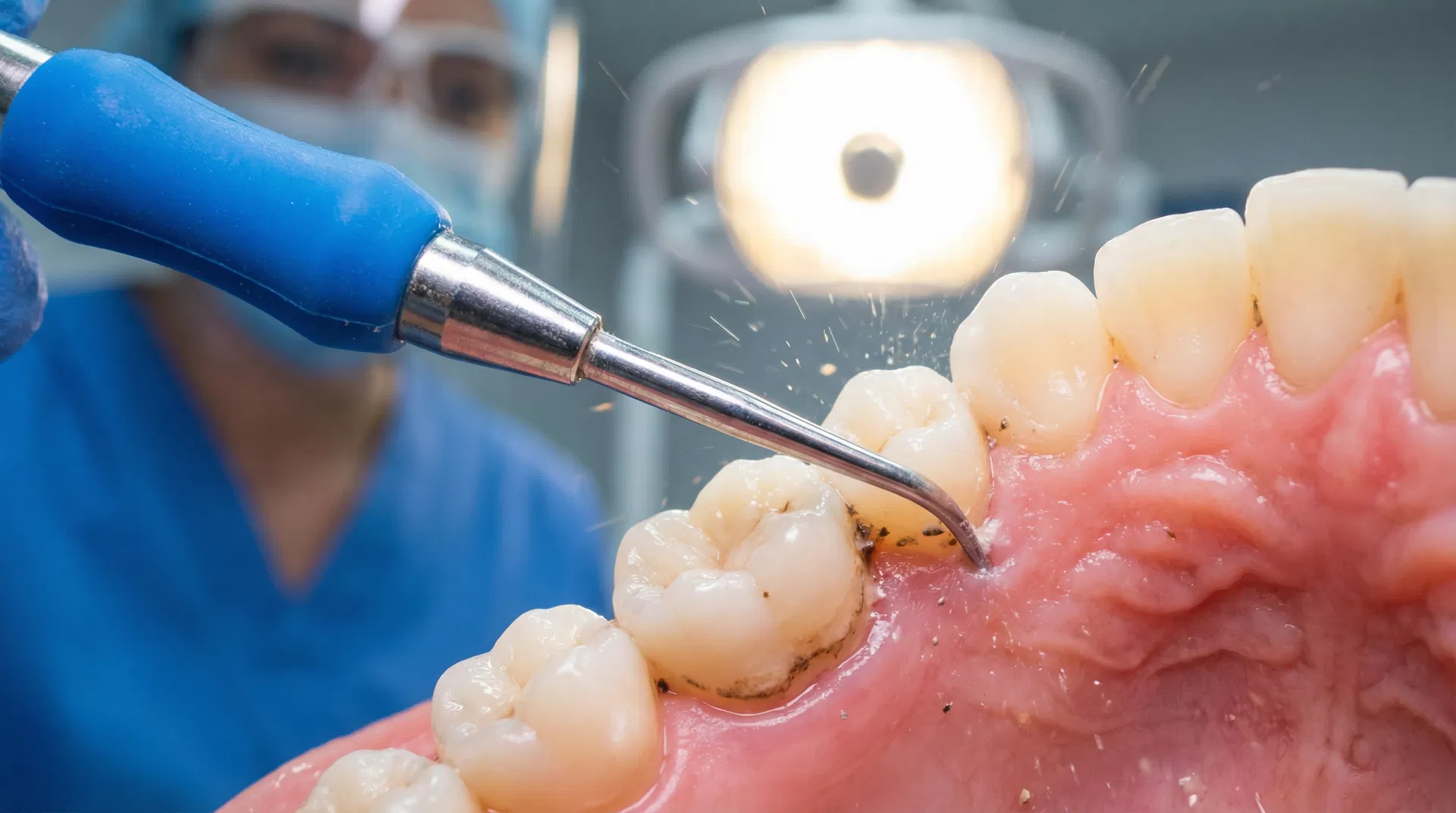
What's happening: The infection has progressed below the gum line. Bacteria are now attacking the bone that supports your teeth. Pockets form where bacteria hide and multiply.
Treatment needed: Professional cleaning and improved home care can slow progression, but some damage may be permanent.
Stage 3: Moderate Periodontitis (Partially Reversible)
Without treatment, early periodontitis becomes moderate periodontitis.
Characteristics:
- Significant bleeding
- Deeper pockets (5-7mm)
- Noticeable bone loss
- Tooth mobility
- Possible tooth migration (teeth shifting position)
- Persistent bad breath
- Possible pus discharge
What's happening: Significant bone loss has occurred. Teeth are becoming loose because they have less support.
Treatment needed: Scaling and root planing, possible surgical therapy, and strict home care.
Stage 4: Advanced Periodontitis (Not Reversible)
Without treatment, moderate periodontitis becomes advanced periodontitis—the most severe stage.
Characteristics:
- Severe bleeding
- Very deep pockets (7mm+)
- Severe bone loss (more than 50%)
- Significant tooth mobility
- Teeth may shift or become loose
- Severe bad breath
- Possible tooth loss
What's happening: Most of the bone supporting your teeth has been destroyed. Teeth may fall out or require extraction.
Treatment needed: Aggressive surgical therapy, possible tooth extraction, and implant replacement.
Why Bleeding Gums Shouldn't Be Ignored
Many patients ignore bleeding gums because they don't cause pain. But this is a dangerous assumption.
Reason 1: Early Detection Saves Teeth
Gum disease is progressive. If you catch it at the gingivitis stage, it's completely reversible. But if you wait, it progresses to periodontitis, which causes permanent bone loss.
Timeline:
- Gingivitis: Reversible with improved hygiene
- Early periodontitis: Partially reversible with professional treatment
- Moderate periodontitis: Requires aggressive treatment
- Advanced periodontitis: May require tooth extraction
Early detection and treatment can save your teeth.
Reason 2: Gum Disease Affects Your Overall Health
Research has linked gum disease to serious systemic health conditions:
- Heart disease: Bacteria from infected gums can enter the bloodstream and affect your heart
- Stroke: Gum disease increases stroke risk
- Diabetes: Gum disease and diabetes have a bidirectional relationship—each worsens the other
- Respiratory infections: Bacteria from infected gums can be aspirated into the lungs
- Pregnancy complications: Gum disease increases risk of premature birth and low birth weight
- Bone loss: Gum disease accelerates bone loss throughout your body
Treating gum disease isn't just about saving your teeth—it's about protecting your overall health.
Reason 3: Treatment Is Easier and Less Expensive Early
Early treatment is always simpler and less expensive than advanced treatment.
Early gingivitis treatment:
- Improved home care
- Professional cleaning
- Cost: KES 5,000-15,000
- Time: 1-2 visits
- Result: Complete reversal
Advanced periodontitis treatment:
- Scaling and root planing
- Possible surgical therapy
- Possible bone grafting
- Possible tooth extraction and implant replacement
- Cost: KES 100,000-500,000+
- Time: 6-12 months of treatment
- Result: Partial reversal, possible tooth loss
Waiting for bleeding gums to go away on their own only increases the cost and complexity of treatment.
Common Misconceptions About Bleeding Gums
Misconception 1: "Aggressive Brushing Causes Bleeding Gums"
While aggressive brushing can cause temporary gum irritation, healthy gums don't bleed from normal brushing. If your gums bleed when you brush gently, it's a sign of gum disease, not aggressive brushing.
Misconception 2: "Bleeding Gums Will Go Away on Their Own"
Unfortunately, bleeding gums won't go away without intervention. Gum disease is progressive—it gets worse over time without treatment.
Misconception 3: "Mouthwash Can Cure Bleeding Gums"
While antimicrobial mouthwash can help reduce bacteria, it cannot cure gum disease. You need professional treatment to remove tartar and bacteria below the gum line.
Misconception 4: "Bleeding Gums Only Happen to People with Poor Hygiene"
While poor oral hygiene is a major risk factor, other factors can cause bleeding gums:
- Genetic predisposition
- Hormonal changes (pregnancy, menopause)
- Certain medications
- Smoking
- Stress
- Nutritional deficiencies
- Systemic diseases (diabetes, leukemia)
Even people with excellent oral hygiene can develop gum disease if they have these risk factors.
What You Should Do If Your Gums Bleed
If you notice bleeding gums, follow these steps:
Step 1: Don't Panic, But Do Take Action
Bleeding gums are a warning sign, not a diagnosis. Schedule an appointment with Dr. Ahmed Nurein to determine the cause and severity.
Step 2: Improve Your Home Care
While waiting for your appointment, improve your oral hygiene:
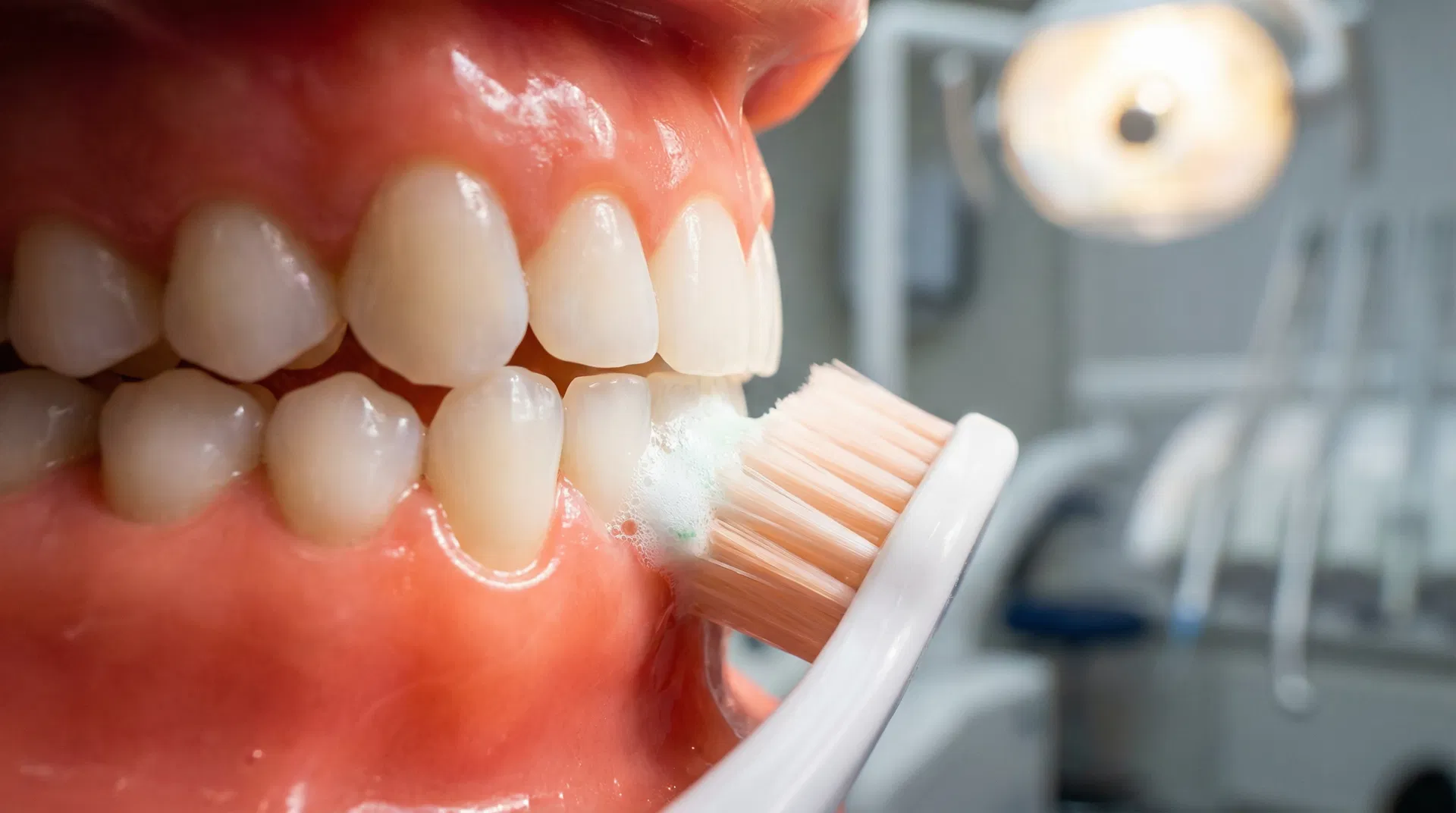
- Brush twice daily: Use a soft-bristled toothbrush and gentle circular motions
- Floss daily: Gently floss between all teeth
- Use antimicrobial mouthwash: Rinse with an antimicrobial mouthwash to reduce bacteria
- Avoid smoking: Smoking impairs gum healing
- Reduce stress: Stress weakens your immune system
- Eat a healthy diet: Proper nutrition supports gum healing
Step 3: Get a Professional Evaluation
Dr. Ahmed Nurein will:
- Examine your gums
- Measure pocket depths
- Take X-rays to assess bone loss
- Determine the stage of gum disease
- Recommend appropriate treatment
Step 4: Follow Your Treatment Plan
Depending on the severity of your gum disease, treatment may include:
For gingivitis:
- Professional cleaning
- Improved home care instructions
- Follow-up visits
For periodontitis:
- Scaling and root planing (deep cleaning)
- Antimicrobial therapy
- Possible surgical treatment
- Regular maintenance visits
Prevention: The Best Medicine
The best way to avoid gum disease is to prevent it in the first place.
Daily Home Care
- Brush twice daily: Use a soft-bristled toothbrush and fluoride toothpaste
- Floss daily: Floss between all teeth and below the gum line
- Use mouthwash: Antimicrobial mouthwash reduces harmful bacteria
- Tongue scraping: Remove bacteria from your tongue
Professional Care
- Regular checkups: Visit Dr. Ahmed Nurein every 6 months (or more frequently if you have gum disease)
- Professional cleanings: Professional cleanings remove tartar that home care cannot
- Gum disease screening: Early detection prevents progression
Lifestyle Factors
- Don't smoke: Smoking is one of the strongest risk factors for gum disease
- Manage stress: Stress weakens your immune system
- Eat a healthy diet: Proper nutrition supports gum health
- Control diabetes: If you have diabetes, keep it well-controlled
- Stay hydrated: Proper hydration supports saliva production
Real-World Example: The Importance of Early Detection
Consider Michael, a 42-year-old patient:
Scenario 1: Early Detection
- Notices bleeding gums and schedules an appointment
- Diagnosed with gingivitis
- Improves home care and gets professional cleaning
- Gums return to normal within 2-3 weeks
- Maintains good oral hygiene and gum health
- Cost: KES 10,000
- Outcome: Healthy gums, all teeth preserved
Scenario 2: Delayed Detection
- Ignores bleeding gums for 2 years
- Eventually sees dentist due to tooth mobility
- Diagnosed with advanced periodontitis
- Requires scaling and root planing, surgical therapy, and bone grafting
- One tooth is too loose and must be extracted
- Requires dental implant to replace extracted tooth
- Cost: KES 300,000+
- Outcome: Lost tooth, complex treatment, permanent bone loss
The difference is dramatic: early detection costs KES 10,000 and solves the problem completely. Delayed detection costs KES 300,000+ and results in permanent tooth loss.
Don't Ignore the Warning Signs
Bleeding gums are your mouth's way of telling you something is wrong. They're not normal, and they won't go away on their own.
If you notice bleeding gums, don't wait. Schedule an appointment with Dr. Ahmed Nurein today. Early detection and treatment can save your teeth, protect your overall health, and save you thousands of shillings in treatment costs.
Remember: gum disease is preventable and treatable, but only if you take action early.
Notice bleeding gums? Schedule a consultation with Dr. Ahmed Nurein at:
- Malindi: +254 719 666 664 | [email protected]
- Watamu: +254 710 911 999 | [email protected]
- WhatsApp: +254 740 580 088
Dr. Ahmed Nurein is a periodontist specializing in gum disease diagnosis and treatment. Visit us at Star Specialist Hospital in Malindi or Watamu Reef Clinic in Watamu.
Share This Article
Help others discover valuable dental health information
About Dr. Ahmed Nurein
Dr. Ahmed Nurein is a periodontist and dental implant specialist with a BDS from the University of Nairobi and an MSc in Periodontology from Marmara University, Istanbul. He is a member of the Cambridge Academy of Dental Implantology and practices at Star Specialist Hospital in Malindi and Watamu Reef Clinic in Watamu, Kenya.
Schedule a consultation →Related Articles
Ready to Transform Your Smile?
Contact Dr. Ahmed Nurein today to discuss your dental implant options.
Book Consultation